


In the energy industry, which plays a central role in the basic supply of energy to the population, efficiency and safety are decisive factors. Every day, contracts are handled here via complex processes that affect both internal workflows and collaboration with partners, suppliers and customers. Whether electricity supply contracts, grid connection contracts or cooperation agreements – almost every business process requires the signing of documents.
An essential part of these processes is the signing of contracts and other documents – a task that often takes up time and resources, but is crucial for smooth business transactions. In this blog, we show you how digital signatures are used for contracts in the energy industry – with a practical example from Innsbrucker Kommunalbetriebe AG (IKB).
The challenges of energy suppliers in signature management
Traditional signatures by hand are increasingly reaching their limits in the energy industry.
Without electronic signatures, organizations face a number of challenges and disadvantages:
- High costs: The need for paper, printers, ink and storage space causes considerable expenses that add up in the long term and put a strain on the budget.
- Time exposure: Manual signature processes are time-consuming and significantly slow down business operations by physically printing, signing, and returning documents.
- More personnel requirements: Often, additional employees are necessary to coordinate document management and signature processes, which causes additional personnel costs.
- Environmental impact: The high consumption of paper contributes to the waste of resources and has a negative impact on the environment, which can also damage the sustainable image of the company.
- Risk of counterfeiting: Handwritten signatures are susceptible to forgery and offer less security and traceability compared to digital signatures.
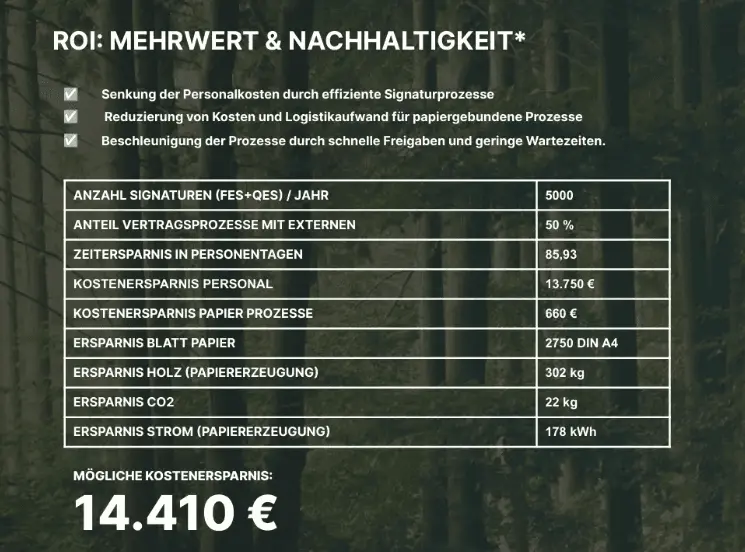
With the integrated ROI calculator , customers can calculate for themselves how much they could save by using digital signatures. The tool clearly shows the savings in the areas of paper, printing and administrative costs and how much time is saved by the digital process. This gives companies a clear idea of the financial and time added value of the digital signature and allows them to make an informed decision as to whether the switch is worthwhile for them.
The benefits of digital signatures in critical infrastructure organizations.
1. Reduced resource consumption: Switching to digital signatures saves paper, printing materials and reduces costs. Less administrative effort, lower material costs and no need for storage space thanks to digital archiving relieve companies. For energy suppliers with many documents, this means enormous advantages and improves the ecological balance in the long term – a good environmentally friendly solution.
2. Improved and faster processes: Digital signatures make it possible to approve and sign contracts and important documents in real time, without the need to send physical copies by mail or arrange face-to-face meetings. In an industry where timely decisions about maintenance, new construction, or contracting are critical, digital signatures can dramatically reduce response times.
3. Simplified collaboration: Digital signatures make collaboration with external partners, such as suppliers and subcontractors, much easier and faster. Partners can be invited to a signature process by e-mail and sign the document immediately, regardless of their location, in a legally compliant manner. This flexibility is particularly valuable in the energy industry, which often involves complex networks of stakeholders.
Digital signing for your company – how does it work?
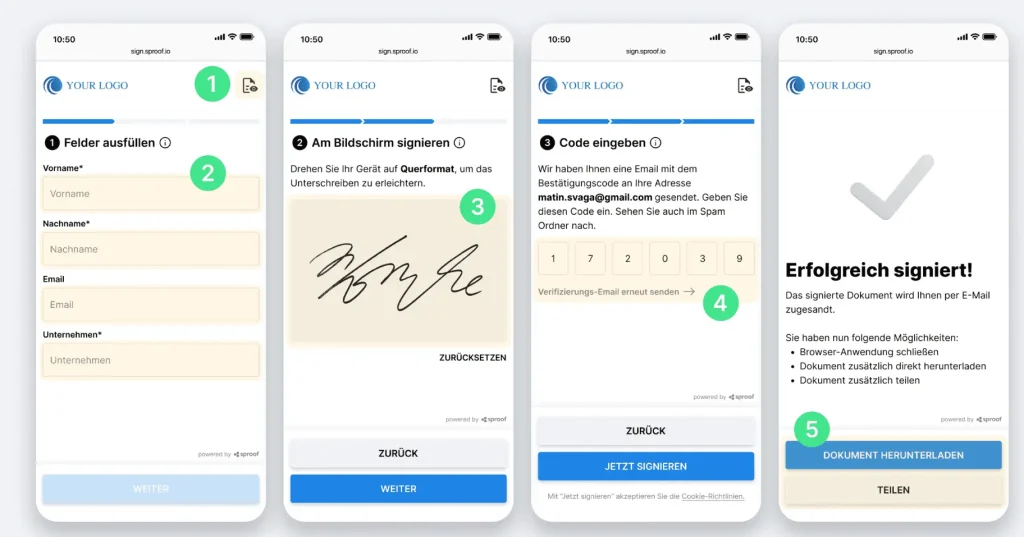
4. Improved traceability and transparency: Digital signatures provide complete traceability and logging of all steps. Every action in the document is documented, so the process remains transparent. Utilities and grid operators can view the status of their documents at any time, reducing misunderstandings and delays and providing clarity to all parties involved.
5. Nachhaltig und umweltfreundlich: In Branchen mit hohem Dokumentenaufkommen trägt die digitale Signatur erheblich zum Umweltschutz bei. Sie reduziert den Papierverbrauch, schont Ressourcen und senkt den Energieverbrauch. Zudem wird sie in Zeiten von Homeoffice und globaler Zusammenarbeit unverzichtbar, da sie ortsunabhängige, schnelle und sichere Prozesse ermöglicht – ein Gewinn für Effizienz und Nachhaltigkeit.
6. Security and Compliance: Digital signatures offer a high level of security and reliability. Documents are not only encrypted, but are also protected from unauthorized access. In particular, the Qualified Electronic Signature (QES) meets the highest legal standards and is legally equivalent to the handwritten signature, which makes it particularly suitable for official documents and contracts and complies with the EU directives for electronic signatures.
The integration of digital signatures in European companies
Die digitale Signatur findet bei Energieversorgern vielseitige Anwendung. Beispiele: Für neue Netzanschlussverträge eignet sich die QES, die einzige elektronische Signatur mit Rechtskraft wie eine handschriftliche Unterschrift. Sie erfüllt höchste Sicherheitsstandards und ist als Beweismittel vor Gericht anerkannt. Für weniger sensible Dokumente, wie Einwilligungserklärungen, reicht oft die FES, da hier keine so hohe rechtliche Absicherung erforderlich ist.
Many companies shy away from digital signatures due to fears of conversion difficulties. However, platforms such as sproof sign simplify the transition. Integration into existing systems is seamless, and user-friendly interfaces enable rapid integration for employees and customers.
The Fastlane from sproof sign enables a fast and legally secure signature process and thus ensures simple and customer-friendly processing. Find out more on this page.
Security, data protection and evidentiary value are priorities in contracts
The platform ensures the highest security standards in the area of data protection and data security with a fully GDPR and eIDAS-compliant solution. All data is stored exclusively in European data centers, and compliance with data protection is secured by a comprehensive data processing agreement (DPA). Regular monitoring and audits ensure that IT security is continuously checked and optimized to ensure the protection of sensitive data at all times.
The platform from sproof sign, one of the leading providers of digital signatures, guarantees.
Possible applications and practical examples
There are various standards of electronic signatures for agreements and contracts with energy suppliers, which can be used depending on the use case.
Use cases from the energy industry for digital signatures in contracts and documentation:
- Electricity supply contracts
- Gas supply contracts
- Employment contracts
- Supply contracts
- Compliance Guidelines
- Audit documentation
Signature standards for contracts and documents:
- Qualified Electronic Signature (QES)
- Advanced Electronic Signature (FES)
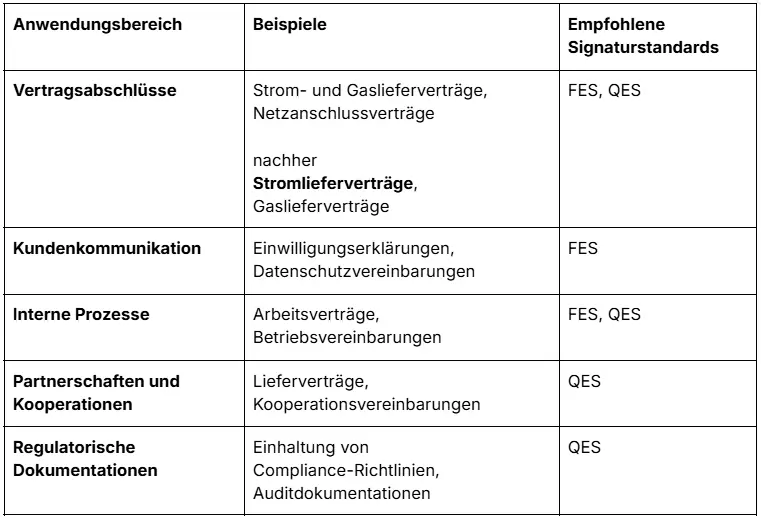
Simple Electronic Signature (EES): This form of signature is the most basic and least regulated. It is suitable for simple transactions where there are no high legal requirements.
Advanced Electronic Signature (FES): The FES provides a higher level of security as it requires clear identification of the signer. It is sufficient in many business transactions and already meets high security standards.
Qualified Electronic Signature (QES): The QES is the most secure form of electronic signature and meets the highest legal requirements. The qualified electronic signature is equivalent to a handwritten signature and is therefore particularly suitable for contracts that require a high level of legal protection.

Innbrucker Kommunalbetriebe (IKB) plays a central role for the region as Tyrol’s leading infrastructure service provider. With over 700 employees, IKB reliably supplies thousands of households and companies with energy, water and other essential services. In order to make its internal and external processes more efficient and modern, IKB decided to introduce digital signatures and thus consistently digitalize its processes.
“We really liked the way we worked together, as well as the flexibility. Since IKB stands for sustainability and regionality, it was important to find a partner in the regional environment. sproof sign could easily keep up with leading US providers. We liked sproof’s solution, especially its user-friendliness and integration options. We felt that we were in very good hands when it came to data protection and compliance with European guidelines.” – Dipl.-Ing. Gerhard Fichtl, Head of IT at Innsbrucker Kommunalbetriebe AG (IKB)
sproof sign as an important building block in the digitalization strategy of the Innsbruck-based energy supplier
IKB pursues clear goals when introducing digital signatures: less paper consumption, automated signature processes and a 100% legally compliant solution. These measures promote resource-conserving working methods and simplify processes. Thanks to the API integration, the platform could be quickly integrated into existing workflows. Digital signatures were easily used internally and externally, saving time and resources. The user-friendly implementation enabled IKB to digitize processes quickly and thus increase efficiency and sustainability – an important step into the future.
Conclusion: Efficient, sustainable and secure business with the digital signature
Digital signatures on contracts are an indispensable investment in the future for energy suppliers . They enable a significant increase in efficiency for contract management, reduce costs and actively contribute to environmental protection. IKB’s experience shows that easy implementation and a GDPR-compliant platform enable a digital transformation that not only improves processes, but also strengthens a company’s ecological balance in the long term.